In most years a British lawn needs no watering at all. The question is what to do in the dry spells that come every few summers: water properly, or let the grass go brown and wait. Both are fine. Doing a bit of each is what goes wrong.
Does your lawn actually need watering?
An established ryegrass lawn is built to go dormant in drought. It turns straw coloured, stops growing and sits it out. When the rain comes back, it greens up within two or three weeks. Watering is worth the effort in three cases: a lawn sown or turfed this year, a lawn you need green for a particular date, and very sandy soil where grass struggles every summer.
How much and how often?
About 2 cm a week in a dry spell, in one or two soakings. That wets the soil to root depth and pulls roots down. A quick sprinkle every evening wets the top centimetre, evaporates by lunchtime and trains the roots to stay shallow, which is exactly what you do not want in the next dry spell.
When is the best time to water?
Early morning, before 9. Less is lost to the sun and wind, and the grass dries during the day. Watering in the evening leaves the lawn wet overnight, which is how red thread and fusarium patch spread.
How do you know the lawn needs water?
- Footprints stay. If the grass does not spring back a few minutes after you walk on it, it is short of water.
- The colour dulls. A blue-grey tinge comes before the brown.
- The screwdriver test. Push a screwdriver into the lawn. In moist soil it goes in easily to 10 cm or more.
What about a hosepipe ban?
Water companies can impose a Temporary Use Ban in a drought, and it covers watering gardens with a hosepipe or sprinkler. Watering cans and water butts are usually still allowed. A lawn is also the part of the garden that copes best without water, so it is the obvious thing to let go when water is short.
What does the app show you?
The app does not tell you to water and sends no reminders. What it does give you is the rain you would otherwise guess at: the weather card shows the chance of rain and the millimetres expected for today and the next two days.
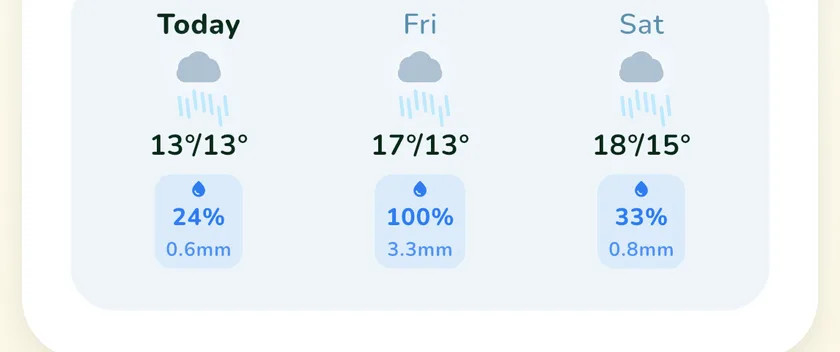
Read it before you get the hose out. A day with 5 mm forecast is a quarter of a weekly soaking, and a wet weekend in the forecast means you can skip it entirely. The app also estimates soil temperature and flags when the soil gets warm enough that the lawn needs keeping watered.

In a hot, dry spell it also raises the recommended mowing height, which helps a stressed lawn more than an extra sprinkle. More on that in What Height to Cut Grass.
How is watering new seed different?
New seed needs the opposite: little and often. Keep the top centimetre damp with a light watering once or twice a day until the seedlings are up, which takes 7 to 14 days for ryegrass, then water less often and more deeply. The sowing windows are in When to Overseed Your Lawn. What a Green Lawn keeps the forecast, the soil temperature and your mowing height in one place, so you water when the weather says so, not by habit.