Lawns are watered far more often than they need and far less deeply than they should be. The goal is simple: soak the root zone, then leave it alone until the grass tells you it is thirsty again.
How much water does a lawn need each week?
About 1 to 1.5 inches, including rain, for a lawn you want green all summer. That is roughly 0.6 gallons per square foot per week. Split it into one or two soakings rather than a daily sprinkle, so the water reaches 4 to 6 inches down and the roots follow it.
Sandy soil takes it faster and holds less, so two half-inch sessions beat one big one. Heavy clay runs off if you put it on too fast: water for 15 minutes, wait half an hour, then water again.
What time of day should you water?
Early morning, between about 4 and 9. Less is lost to evaporation than at midday, wind is usually lighter, and the blades dry before dark. Watering in the evening leaves the grass wet all night, which is how dollar spot and brown patch get started in a humid August.
How do you know when the lawn needs water?
Watch the grass, not the calendar:
- Footprints stay. Walk across the lawn. If the prints are still visible after a few minutes, the blades have lost their spring and water is due.
- The color turns blue-grey. A lawn that is about to go dormant loses its green shine first.
- The screwdriver test. A screwdriver should push 4 to 6 inches into moist soil. If it stops at 2 inches, the root zone is dry.
Should you water in summer or let the lawn go dormant?
Both work. Kentucky bluegrass is built to go dormant: it browns off, stops growing and survives four to six weeks that way, then greens up within two weeks of real rain. Tall fescue stays green longer because it roots deeper.
What hurts is switching back and forth. Pick one:
| Plan | What to do | Trade-off |
|---|---|---|
| Keep it green | 1 to 1.5 inches a week, in one or two soakings | Water bill, and mowing keeps going |
| Let it go dormant | A quarter inch every two or three weeks, enough to keep crowns alive | Brown lawn until rain returns |
Stay off a dormant lawn as much as you can, and do not fertilize it.
What does the app tell you about watering?
There is no watering button in What a Green Lawn, and no reminders. What it does give you is the rainfall you would otherwise guess at: the weather card shows the rain expected in the next 24 hours and over the next three days in inches, next to the chance of rain.
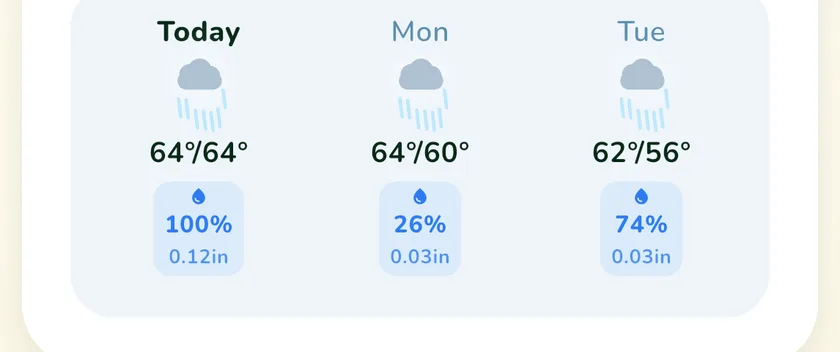
Read it before you set the sprinkler. Rain counts toward the weekly inch, so a day with a third of an inch in the forecast is a session you can skip. The app also estimates soil temperature and warns when it gets hot, and in a dry spell it raises the recommended mowing height, which does more for a stressed lawn than an extra sprinkling.

How is watering new seed different?
New seed needs the opposite pattern: little and often. Keep the top inch of soil damp with a light watering once or twice a day until the seedlings are up, which takes 7 to 14 days for bluegrass and ryegrass. Then stretch the interval and water deeply. The seeding windows are in When to Overseed Your Lawn.
Check your village’s watering rules before you set a timer, because odd and even day restrictions are common in Chicago’s suburbs in July and August. What a Green Lawn keeps the forecast, the soil temperature and your mowing height in one place, so watering decisions come down to what the weather is actually doing.