
Most British lawns come out of summer thin in places: worn by football, scorched by a dry July, or patchy under the trees. Overseeding fixes that, but only if you catch the window when the soil is warm and damp at the same time. In the UK that window is early autumn.
When is the best time to overseed a lawn?
From late August to the end of September. After summer the soil is still 12-18°C, nights are getting damper and rain becomes more regular. Seed germinates quickly and the young grass has the rest of autumn to root before frost.
April to May is the second choice. The soil is warm enough, but weeds germinate at the same time, and a dry late spring means watering every day for weeks.
Why does grass seed not germinate in cold soil?
Seed responds to soil temperature, not air temperature. Below about 8°C in the soil, germination almost stops and the seed sits there for the birds. Between 12 and 18°C perennial ryegrass comes up in about a week. Above about 24°C the surface dries out too fast for new roots.
That is why sowing on the first warm weekend in April often fails. The air may be 15°C while the soil is still 6°C.
How do you tell if it is the right day?
Check the soil temperature and the forecast. You want warm soil and light to moderate rain, not a downpour that washes the seed into puddles. Here is a back garden in Manchester:
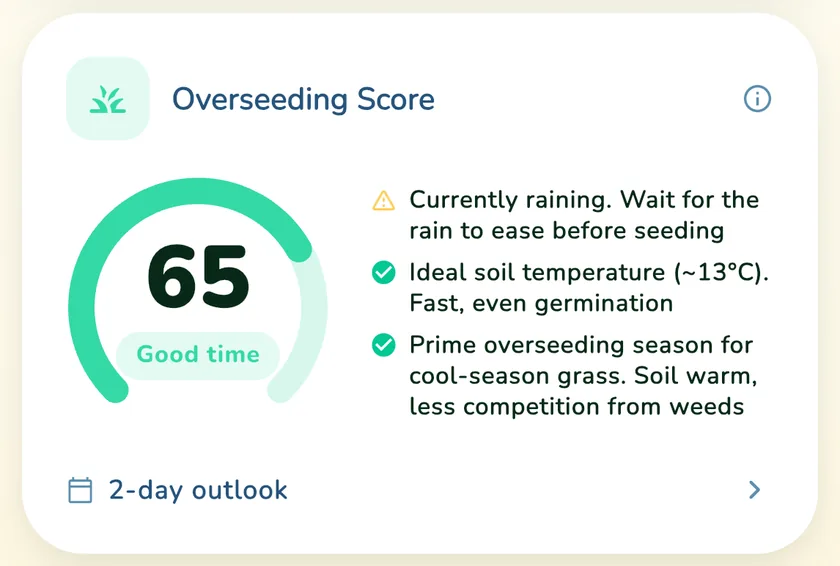
The app scores it 65 out of 90. The soil is about 13°C, ideal for fast, even germination, and mid-September is prime season for cool-season grass. What holds it back is that it is raining right now: sow once it eases, so the seed stays where you put it. The app estimates soil temperature from air temperature and the month, because in September the ground holds summer warmth and runs warmer than a chilly morning suggests.
How do you overseed a lawn?
The short version: mow short, rake out moss and thatch, sow 25-35 g per m² on the thin areas, rake in, top dress lightly and keep it moist. The steps are further down this page.
The step most people skip is getting the seed into contact with soil. Seed on top of a mat of moss germinates and then dies, because the roots never reach the ground. If the lawn is mossy, scarify first. When to do that is covered in When to Scarify Your Lawn.
Which grass seed should you use?
For a family lawn that gets played on, a mix with plenty of perennial ryegrass: it germinates fast and takes wear. For a fine ornamental lawn, a fescue and bent mix. For shade under trees, look for a shade mix with more fescue. Most garden centre boxes are labelled clearly for “hard wearing”, “fine lawn” or “shady areas”.
Should you feed when you overseed?
Seedlings need phosphorus and a little nitrogen, but a strong spring feed can scorch new roots. Use a pre-seed or new lawn feed when you sow, and do not use feed, weed and moss products for at least a couple of months afterwards.
What a Green Lawn checks soil temperature and rain for your garden every day and scores overseeding, feeding and scarifying, so you sow in the window rather than the week before it.