Lawn care follows the grass, not the calendar. British lawns of ryegrass, fescues and bents grow most in spring and autumn and slow down in hot, dry spells. This calendar suits most of England and Wales; Scotland and the north run a couple of weeks later, the south west a little earlier.
What should you do each month?
| Month | Main jobs |
|---|---|
| January | Keep off frozen or waterlogged grass. Service the mower. |
| February | Sharpen blades. Rake off debris on dry days. |
| March | First cut on a high setting once growth starts. Rake and tidy. |
| April | Spring feed. Treat moss with an approved moss killer. Light scarify. |
| May | Cut weekly. Patch bare spots. Hand weed or spot treat. |
| June | Raise the blades in hot spells. Water deeply or let it go brown. |
| July | Summer care: cut high, no feed in drought. |
| August | Plan autumn renovation. Keep cutting high. |
| September | Scarify, aerate, overseed, autumn feed. Test soil pH. |
| October | Clear leaves, top dress, final feed, fewer cuts. |
| November | Last cut when growth stops. Keep leaves off the lawn. |
| December | Rest. Keep off frosty grass. |
What does the app’s calendar show?
What a Green Lawn builds a week-by-week task list from the lawn’s location, grass type and mowing height. For a lawn in Manchester, the week of 7 September looks like this:
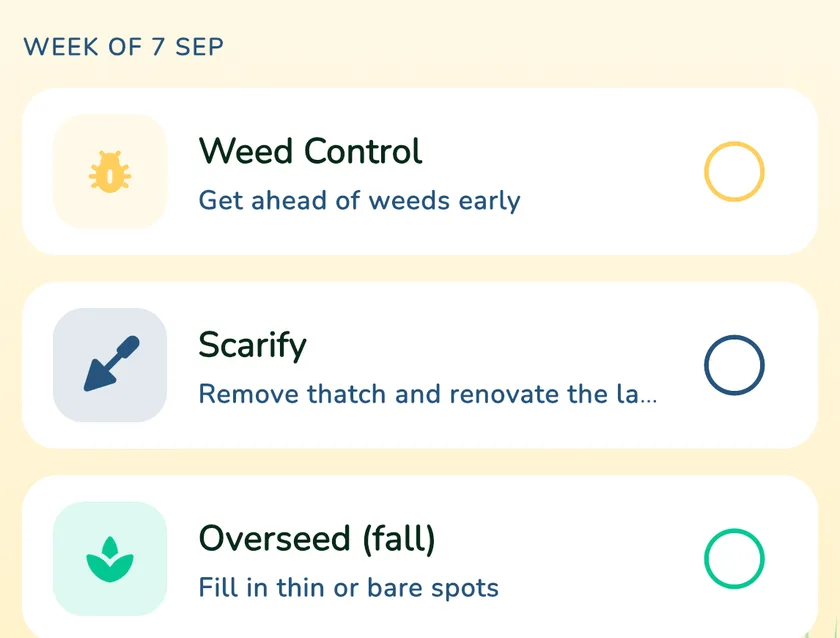
Across the year the calendar puts feeding in April, May and September to November, weed control at the start of each month from March to October, scarifying in April and September, overseeding in May and September, a spring clean-up in March, leaf clearing in October and a soil pH check in September. December to February are rest months. Each month also has a mowing card with frequency, height and the best time of day.
Which weed and moss killers can you use?
Only products approved for amateur use, with a MAPP number on the label, applied as the label says. Iron sulphate sold as a lawn tonic is not an approved moss killer, see moss in your lawn. A thick, well-fed lawn cut at the right height keeps most weeds out on its own.
How do you adjust the calendar to your lawn?
Watch the grass and the soil, not the date. A cold spring pushes April jobs into May; a mild autumn stretches cutting into December. Soil temperature is the best guide for sowing, see soil temperature for grass. See also first and last cut of the year and when to feed your lawn.
What can you skip?
Feeding in drought, scarifying in summer, and lime without a soil test; many UK lawns do not need it, see should you lime your lawn.
What a Green Lawn turns this calendar into weekly tasks for your own lawn, with the forecast and soil estimate on the same screen.