Lawn care follows the grass, not the calendar. Kentucky bluegrass, fescues and ryegrass grow most in spring and fall and slow down in summer heat. This schedule fits southern Ontario and southern Quebec; the Prairies and the north run a few weeks later, coastal BC a few weeks earlier.
What should you do each month?
| Month | Main jobs |
|---|---|
| January | Keep off snow-covered lawn paths. Service the mower. |
| February | Sharpen the blade. Avoid piling salty snow on the lawn. |
| March | Stay off soggy grass as the snow melts. |
| April | Rake out matted patches and snow mold once the lawn dries. |
| May | First mows. First feeding once growth is steady. Seed bare spots. |
| June | Mow at about 6 to 7 cm. Water deeply or let the lawn go dormant. |
| July | Mow high, skip fertilizer in heat, check for grubs. |
| August | Late August: start fall renovation, core aerate. |
| September | Overseed, dethatch, feed and treat weeds where allowed. |
| October | Keep mowing, mulch leaves, second fall feeding. |
| November | Last mow, final feeding before freeze-up, drain irrigation. |
| December | Rest. |
What does the app’s calendar show?
What a Green Lawn builds a week-by-week task list from the lawn’s location, grass type and mowing height. For a lawn in Toronto, the week of September 7 looks like this:
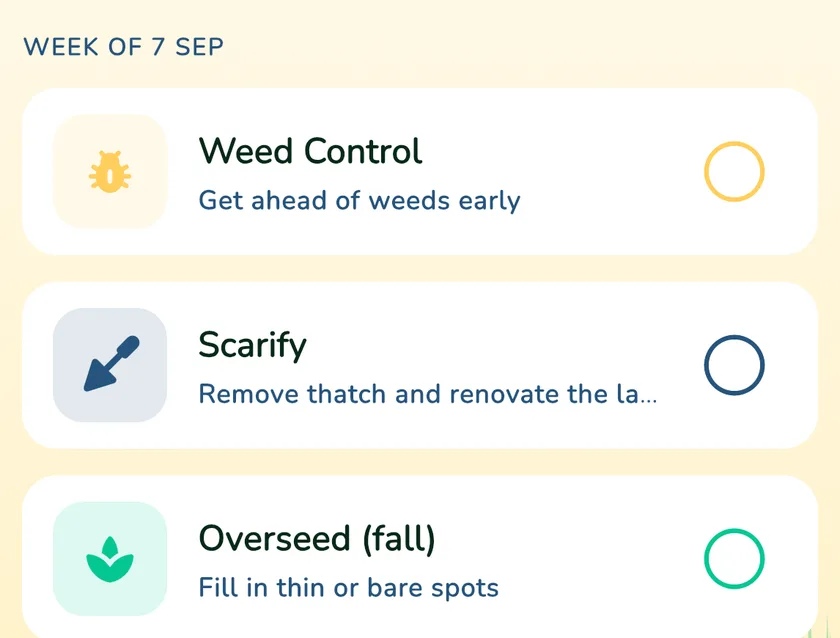
Across the year the calendar puts feeding in April, May and September to November, weed control at the start of each month from March to October, dethatching in April and September, overseeding in May and September, a spring cleanup in March, leaf clearing in October and a soil pH check in September. December to February are rest months. Its dates follow a single northern schedule, so in Canada treat the March and April tasks as “once the snow is gone”.
Which weed control is allowed?
Pest control products in Canada carry a registration number under the Pest Control Products Act. On top of that, Ontario and several other provinces ban cosmetic pesticide use on lawns and allow only lower-risk active ingredients, including some iron-based weed killers. Check your province’s rules before you buy, and remember that a thick lawn mowed high keeps out most weeds.
How do you adjust the calendar to your region?
Watch the grass and the soil, not the date. Soil temperature is the best guide for seeding, see soil temperature for lawns. See also first and last mow of the year and when to fertilize your lawn. Lime only on acidic soil, see lawn lime and soil pH.
What a Green Lawn turns this calendar into weekly tasks for your own lawn, with the forecast and soil estimate on the same screen.