“Fertilize in spring” is the advice on half the bags at the store, and for most of the country it is the least important feeding of the year. When your lawn needs fertilizer depends on what kind of grass you have, and on which day you actually put it down.
When should you fertilize cool-season grass?
Kentucky bluegrass, tall fescue, fine fescue and perennial ryegrass cover the northern half of the US, from Chicago and Denver to Boston. They grow in two bursts: spring and fall. Fall is the one that counts.
| When | Why | How much |
|---|---|---|
| Late August to mid-September (around Labor Day) | Warm soil, cool nights. Grass rebuilds roots after summer stress | Full rate |
| Late October to early November | Last feeding before the ground freezes. Roots keep storing food after the top stops growing | Full rate |
| Mid to late May (around Memorial Day) | Grass is growing and soil is well above 55°F | Light rate, slow-release |
Skip the early-spring feeding in March. The soil is still cold, the grass cannot use it, and what it does use goes into top growth right before you need a strong lawn for summer.
When should you fertilize warm-season grass?
Bermuda, zoysia, St. Augustine and centipede grow when it is hot. Feed them when they are fully green and actively growing, which usually means soil above 65°F and daytime highs in the 80s:
- First feeding: after full green-up, typically late April to May. Feeding a half-dormant lawn mostly feeds the weeds.
- Through summer: every six to eight weeks until August.
- Last feeding: about six weeks before your average first frost. Late nitrogen makes warm-season grass tender going into winter.
Some Florida counties ban nitrogen and phosphorus fertilizer from June through September to protect waterways, so check your county before you plan a summer feeding.
How do you pick the right day?
The month gets you close. The day decides whether the fertilizer ends up in the grass or in the storm drain. Three things matter:
- Temperature. Cool-season grass takes up nitrogen best when it is 60-75°F. Below about 40°F almost nothing happens.
- Rain. Granular fertilizer needs water to dissolve. A quarter to half an inch in the next day is ideal. A thunderstorm or more than about 0.8 inches coming means wait. The details are in Should You Fertilize Your Lawn Before or After Rain?
- Time since the last feeding. Under three weeks is too soon, no matter what the weather does.
Here is what that looked like for a bluegrass lawn in Chicago on September 17, 2026:
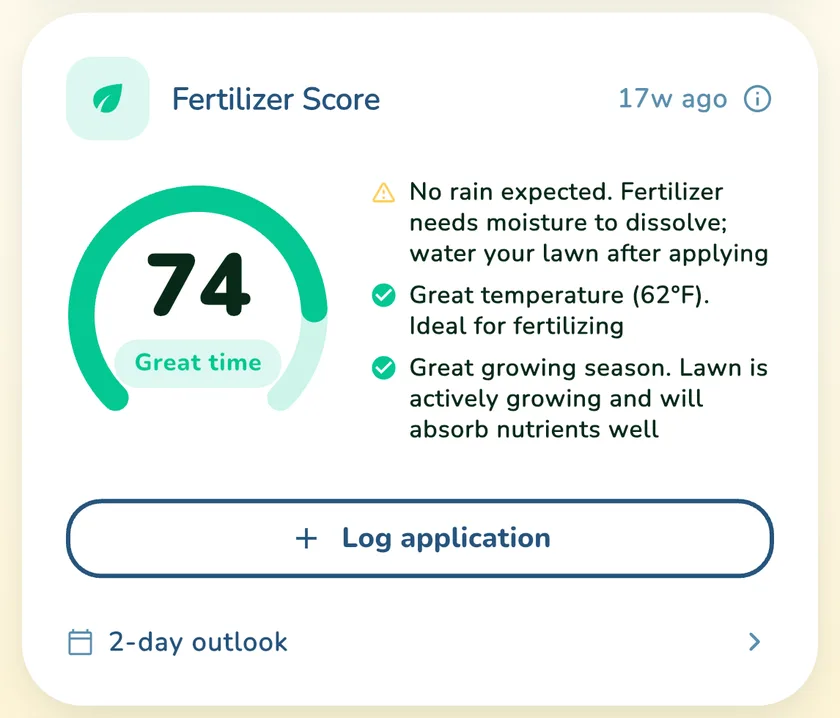
The score is 74, a great time: 62°F, the middle of the fall feeding window, and 17 weeks since the last application. The only thing missing is rain, so the app says to water the lawn after you spread. About a quarter inch from a sprinkler is enough to dissolve the granules. Heavy rain would change the picture: with more than about 0.8 inches forecast, the app says wait, because fertilizer spread today would wash off before it soaks in.
How often should you fertilize?
Most home lawns do well with three to four feedings a year, six to eight weeks apart. More often than that mostly means more mowing. If you use a slow-release product, two fall feedings and one in late spring are plenty for a cool-season lawn.
Phosphorus is a separate question. Illinois, Minnesota, Wisconsin and New York are among the states that restrict phosphorus in lawn fertilizer unless a soil test shows you need it, which is why most bags in the Midwest read something like 30-0-4. Unless you are seeding a new lawn, the middle zero is fine.
How much should you put down?
That depends on the nitrogen percentage on the bag and the size of your lawn. The math, with a 5,849 sq ft Chicago yard as the example, is in How Much Fertilizer Does Your Lawn Need?
What a Green Lawn checks the forecast for your address every day and scores fertilizing, overseeding and dethatching, so you know which Saturday is worth hauling out the spreader.