United States
Lawn care, timed to your weather
Specific answers to the timing questions that decide whether a lawn thrives: when to fertilize, how short to mow, when to overseed and when to leave it alone. Written for your climate, from the same rules the What a Green Lawn app checks against your forecast every day.
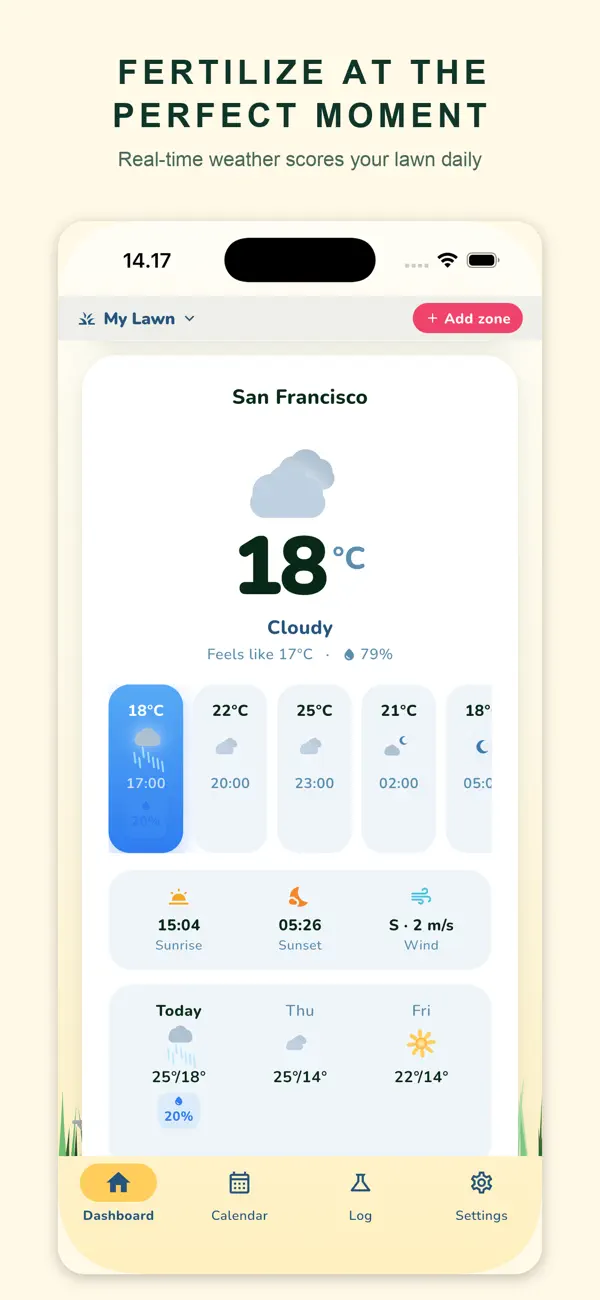
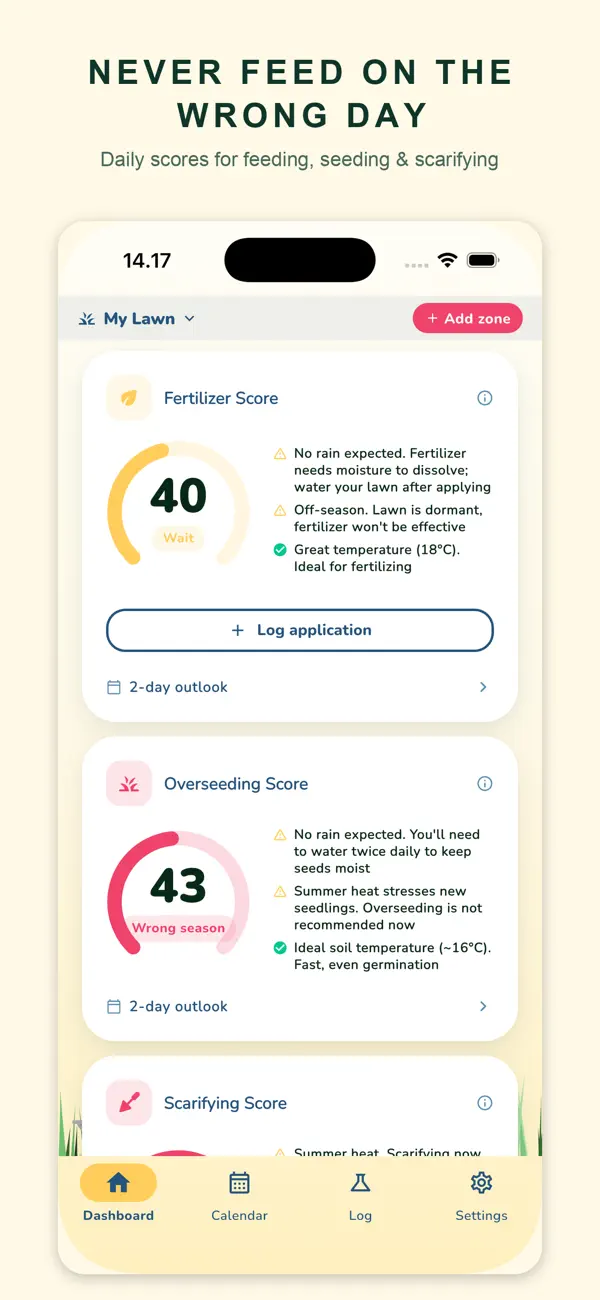
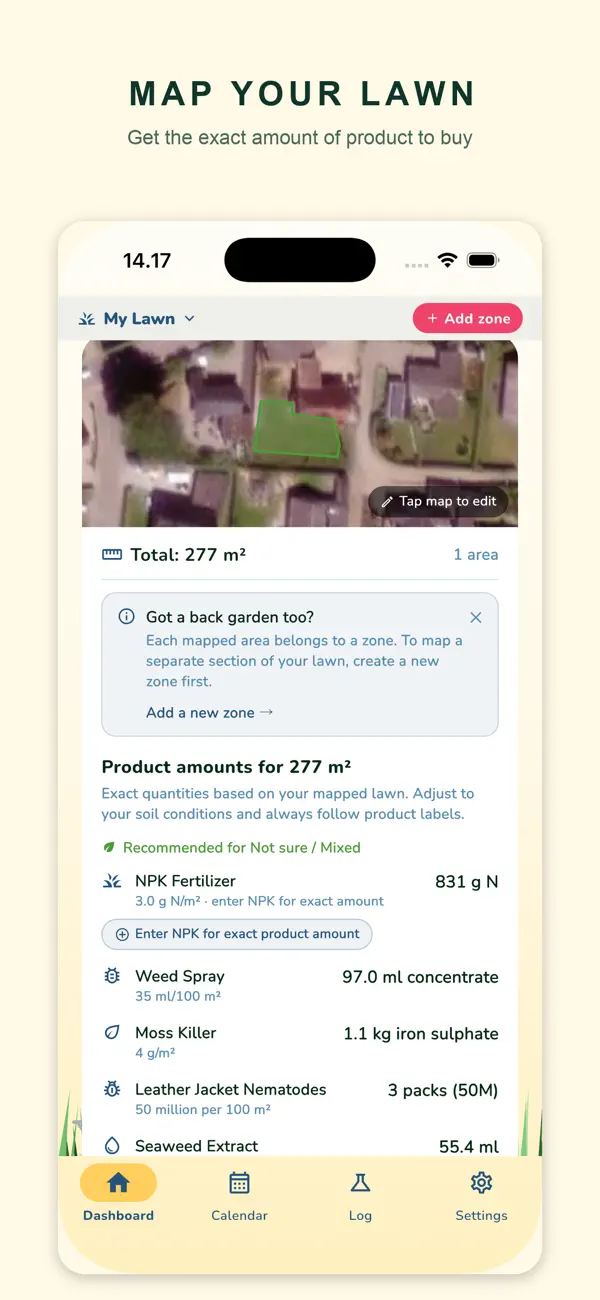
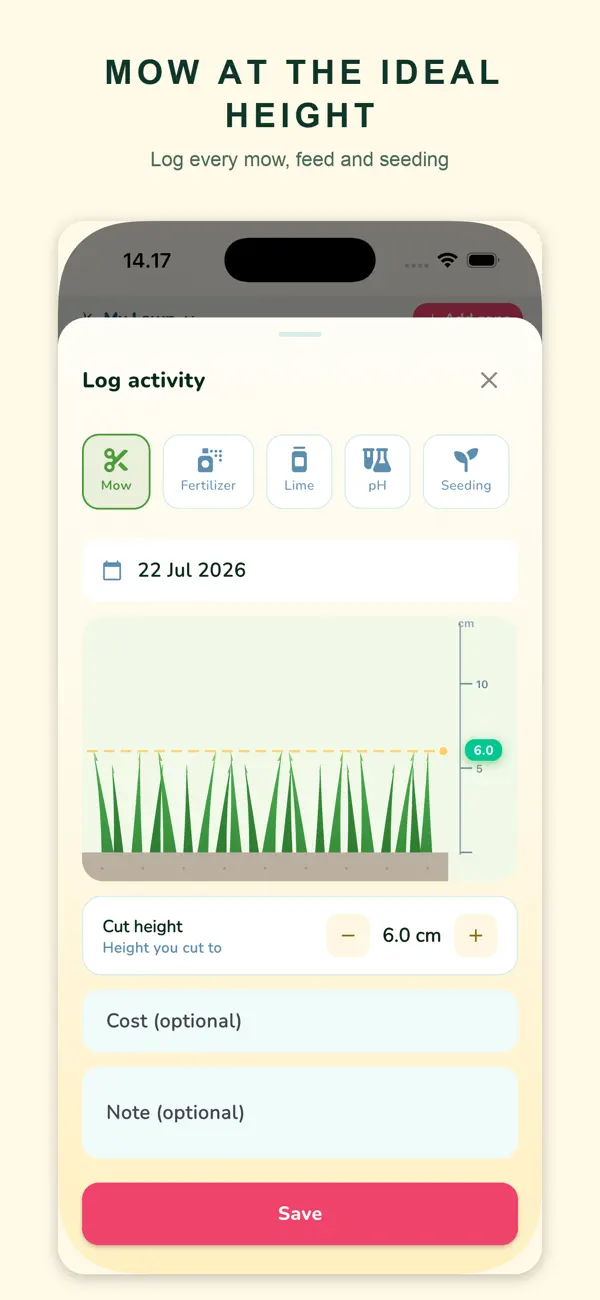
How the app works
- Add your lawn. Draw it on the map and the app works out its size, so product amounts match your yard.
- Every day it scores fertilizing, overseeding and dethatching against your local forecast, and suggests a mowing height for the weather.
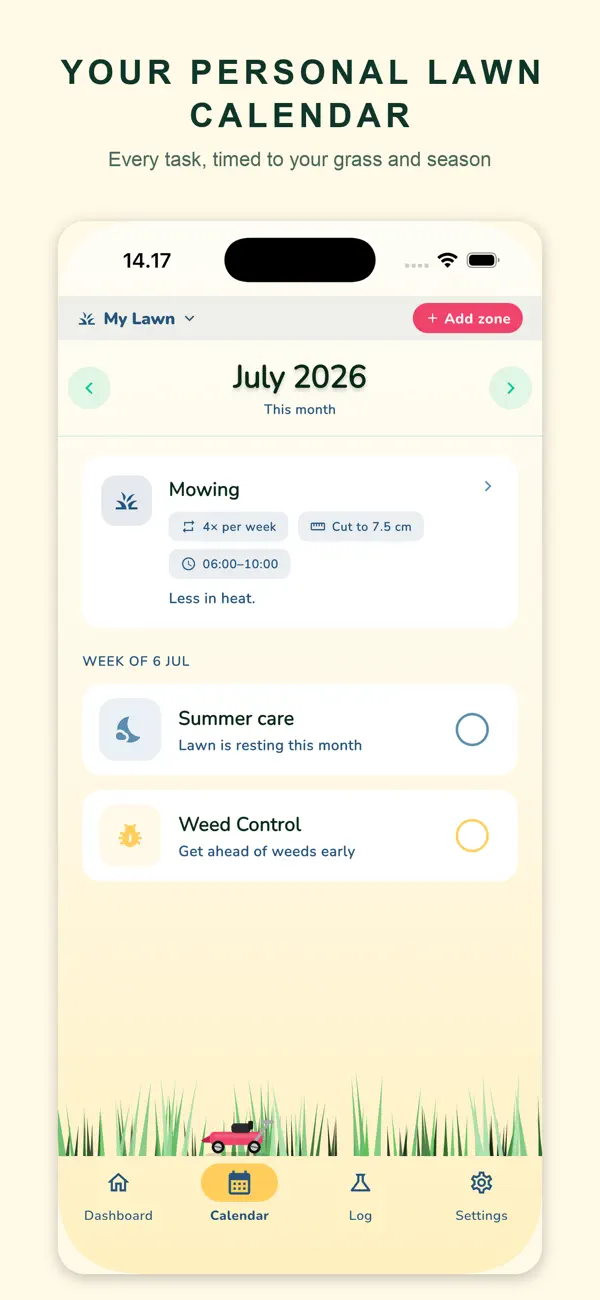
- Log what you did. The calendar plans the next job around your grass type and the season.
Guides
Fertilizing
- Does Your Lawn Need Lime? Soil pH, Testing and How Much to Apply Grass grows best at a soil pH of 6.0 to 7.0. How to test, when lime helps, how much per 1,000 sq ft, and why many Midwest lawns need sulfur, not lime.
- Should You Fertilize Your Lawn Before or After Rain? Light rain after fertilizing is ideal, a storm is not. How much rain waters it in, how much washes it away, and why weed and feed needs a dry day.
- How Much Fertilizer Does Your Lawn Need? The Math, Per 1,000 Sq Ft Most lawns need 0.5 to 1 lb of nitrogen per 1,000 sq ft per feeding. How to turn that into pounds of product, with a 5,849 sq ft Chicago yard as the example.
- When to Fertilize Your Lawn: Months, Soil Temps and the Right Day Cool-season lawns get most of their feed in fall, warm-season lawns after green-up. How to pick the actual day from temperature, rain and your last application.
Seeding and overseeding
Dethatching and aeration
Mowing
- Mowing Wet Grass: Is It Bad, How Long to Wait, How to Do It Right Why mowing wet grass tears the blades, clogs the deck and ruts the lawn, how long to wait after rain or dew, and what to change when you have to mow anyway.
- First and Last Mow of the Year: When to Start and Stop Mowing Start mowing when the grass is growing and the ground is firm, usually April in the North. Stop when growth stops in late fall, at 2 to 2.5 inches.
- How Short to Mow Grass: Mowing Height by Grass Type and Season Bluegrass and fescue at 3 inches or more, Bermuda at 1 to 2. The right mowing height for your grass, when to raise the deck in summer, and the one-third rule.
Watering
Weeds and moss
Planning and lawn records
- How to Measure Lawn Size in Square Feet Before You Buy Split the lawn into rectangles, triangles and circles, add them up and subtract beds, or trace it on a satellite map. The square footage every bag asks for.
- Lawn Care Log: What to Track and Why It Makes Your Lawn Better Fertilizer, mowing height, seed, lime and soil pH. What to write down in a lawn care log, and how it tells you when the next application is due.
Lawn care by season
- Lawn Care Calendar: What to Do Month by Month (Cool-Season) A month-by-month lawn care schedule for cool-season lawns in the northern US: mowing, feeding, crabgrass preventer, seeding, dethatching and winter prep.
- Soil Temperature for Lawns: When to Seed, Feed and Dethatch Grass follows soil temperature, not air temperature. The °F thresholds for seeding, crabgrass preventer, dethatching and feeding, and how to measure it.