The first warm weekend of spring sends half of Australia to Bunnings for a bag of lawn food. For most lawns that is a couple of weeks early. Warm-season grasses need warm soil before they can use fertiliser, and a cool snap in September can undo a whole bag.
When should you fertilise a warm-season lawn?
Buffalo, couch, kikuyu and zoysia cover most Australian backyards from Perth to Brisbane. They grow when it is warm and slow right down in winter, so the feeding calendar follows the warmth:
| When | Why | How much |
|---|---|---|
| Spring, once growing (late September to October in Sydney) | Lawn is waking up and needs food for new growth | Full rate |
| Summer, every six to eight weeks | Peak growth, especially for couch and kikuyu | Full or light rate, depending on colour |
| Early autumn (March to early April) | Builds strength and colour going into winter | Full rate, ideally higher in potassium |
| Winter | Warm-season grass is dormant | Skip it |
In Melbourne, Canberra and Hobart, where many lawns are tall fescue or ryegrass, shift the spring feed later and add a light autumn feed in April to May, because cool-season grasses keep growing through the cooler months.
Buffalo or St Augustine?
What Australians call soft leaf buffalo, like Sir Walter or Palmetto, is the same species as American St Augustine grass, Stenotaphrum secundatum. American “buffalo grass” is a completely different plant from the Great Plains. In the What a Green Lawn app, pick St. Augustine for a buffalo lawn, or the feed rates and seasons will be wrong.
How do you pick the right day?
The season gets you close. The day decides whether the fertiliser works:
- Warmth. Warm-season grass uses nitrogen best from the mid 20s up to the low 30s. Below about 10°C it barely grows.
- Rain. Granular fertiliser needs water to dissolve. 5-10 mm in the next day is ideal. More than about 20 mm, or a storm, means wait. No rain means you water it in.
- Time since the last feed. Under three weeks is too soon.
Here is a buffalo lawn in Sydney on a cool September evening in 2026:
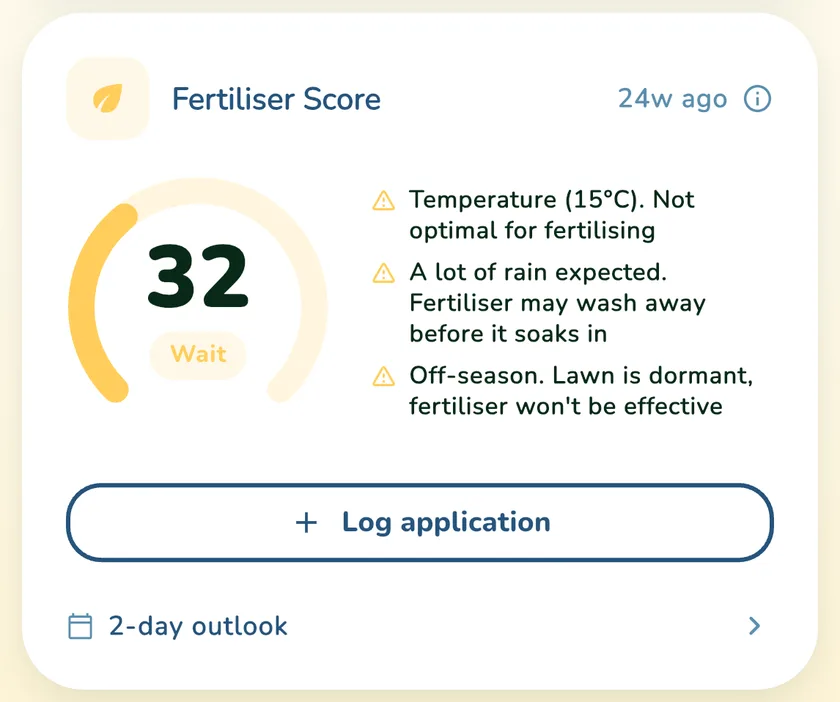
The score is 32 out of 90, wait. At 15°C the buffalo is only just waking up and can’t use much nitrogen, 15 to 20 mm of rain is forecast, enough to wash some granules away, and for warm-season grass September is still the tail of winter. The app is not saying “never feed in September”. It is saying “not today”. A week of mid-20s days with a light shower on the way will look completely different.
Should you feed in winter?
Not a warm-season lawn. Below about 15°C buffalo, couch and kikuyu slow down or go dormant, and the fertiliser sits there until rain washes it away, or feeds winter grass and bindii instead. If your lawn looks pale in July, that is normal. Give it a good feed when it starts growing in spring.
How much should you use?
It depends on the nitrogen percentage on the bag and the size of the lawn. The sum, with a 260 m² Sydney backyard as the example, is in How Much Lawn Fertiliser Do You Need?
What a Green Lawn checks the forecast for your address every day and scores fertilising, oversowing and scarifying, so you feed when your lawn can actually use it.