
Every fall the same thing happens: people look at the thin, tired lawn left over from summer and wonder whether they should wait for spring. Don’t. For bluegrass, fescue and ryegrass, late summer is the best seeding window of the year, and spring is the one most likely to fail.
When is the best time to overseed a cool-season lawn?
From about mid-August to mid-September across the northern states, a couple of weeks later in the transition zone. Three things line up:
- Warm soil. Still 60-70°F after summer, so seed germinates fast.
- Cooling air. Young grass grows without the heat stress of July.
- Fewer weeds. Crabgrass is finishing its life cycle and will not come back until spring.
That gives the new grass six to eight weeks of good growing weather and a full winter to establish roots before summer heat tests it.
Why is spring overseeding harder?
Spring soil warms slowly. The air can hit 70°F in April while the soil is still in the 40s, and seed sits there doing nothing. By the time the new grass is established, it is June and the seedlings face their first summer with shallow roots.
The bigger problem is crabgrass preventer. Most pre-emergent herbicides stop every seed from germinating, grass seed included, for two to four months. You can either seed or prevent crabgrass in spring, not both. The exception is mesotrione (Tenacity), which lets grass seed come up.
What about warm-season grass?
Bermuda, zoysia, centipede and buffalograss need warm soil, above 65°F and steady, which in most of the South means May to early July. Seeding them in fall fails because the seedlings do not have time to harden off before the first frost. St. Augustine is almost never grown from seed; it goes in as sod or plugs.
How do you pick the right day?
Soil temperature and the forecast. You want soil between about 50 and 65°F and light rain on the way, not a downpour that washes seed into piles. Here is a Kentucky bluegrass lawn in Chicago:
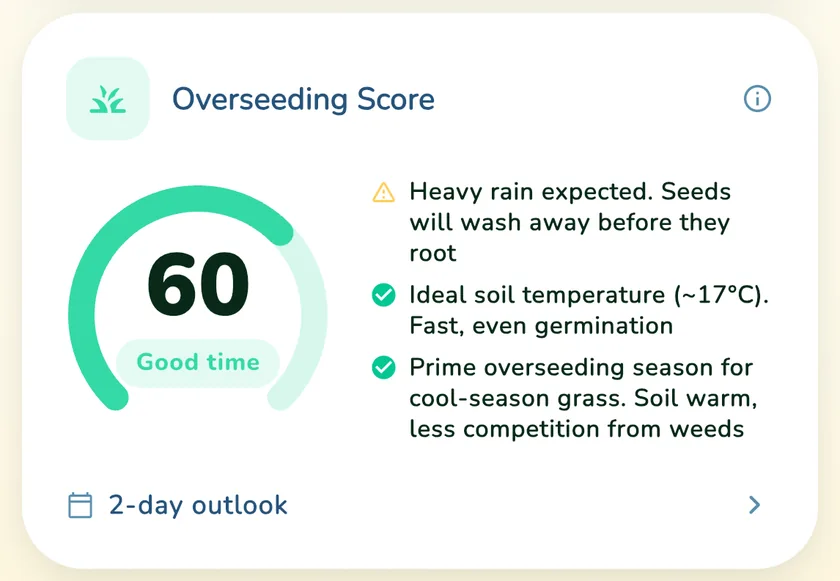
The score is 60 out of 90. The soil is about 63°F, ideal for fast, even germination, and mid-September is prime season. What holds it back is the forecast: heavy rain would float the seed off bare spots before it can settle. The app estimates soil temperature from air temperature and the month, because in September the ground holds summer heat and runs warmer than a cool morning suggests.
How do you overseed?
The steps are at the bottom of this page. The one most people skip is getting seed into contact with soil. Seed thrown on top of thatch germinates and then dies, because the roots never reach dirt. Core aerating or slit seeding first makes more difference than buying more seed. If the lawn has a thick thatch layer, dethatch before you seed; see When to Dethatch Your Lawn.
Then water. New seed that dries out once is dead. A light sprinkle once or twice a day beats a deep soak once a week until the grass is up.
Which seed should you buy?
For most sunny lawns in the Midwest and Northeast, a tall fescue or a bluegrass and ryegrass blend. Tall fescue has deep roots and handles heat and drought better. Kentucky bluegrass spreads and repairs itself, but is slow to germinate. Perennial ryegrass comes up fast and fills gaps while the others catch up. For shade under trees, look for a fine fescue blend.
What a Green Lawn checks soil temperature and rain for your address every day and tells you when the seeding window is actually open, plus the best days to fertilize and dethatch.