Lime fixes acidic soil and nothing else. Plenty of Australian lawns do sit on acidic soil, but many inland ones are alkaline, and liming those makes things worse. Test first.
What soil pH does a lawn like?
Couch, kikuyu, soft leaf buffalo and zoysia all grow well between about 6.0 and 7.0. Below about 6.0, nutrients like phosphorus become harder for roots to use and the lawn thins. Above about 7.5, iron is harder to take up and lawns can yellow even when fed.
Are Australian soils acidic?
Many are. Sandstone and sandy soils along the east coast, including much of Sydney, tend to be acidic, because rain leaches calcium out over time. Many inland and South Australian soils are alkaline, sometimes strongly. That is why a test beats a rule of thumb.
How do you test soil pH?
Take 10 to 15 small cores from across the lawn, 5 to 10 cm deep, mix them and test. A garden centre pH kit gives a decent reading. A soil lab gives a precise one, often in two versions: pH in water and pH in calcium chloride. The CaCl2 number usually reads around half a unit lower, and the 6.0 to 7.0 range here is in water.
What a Green Lawn charts the readings you log and flags anything outside 6.0 to 7.0:
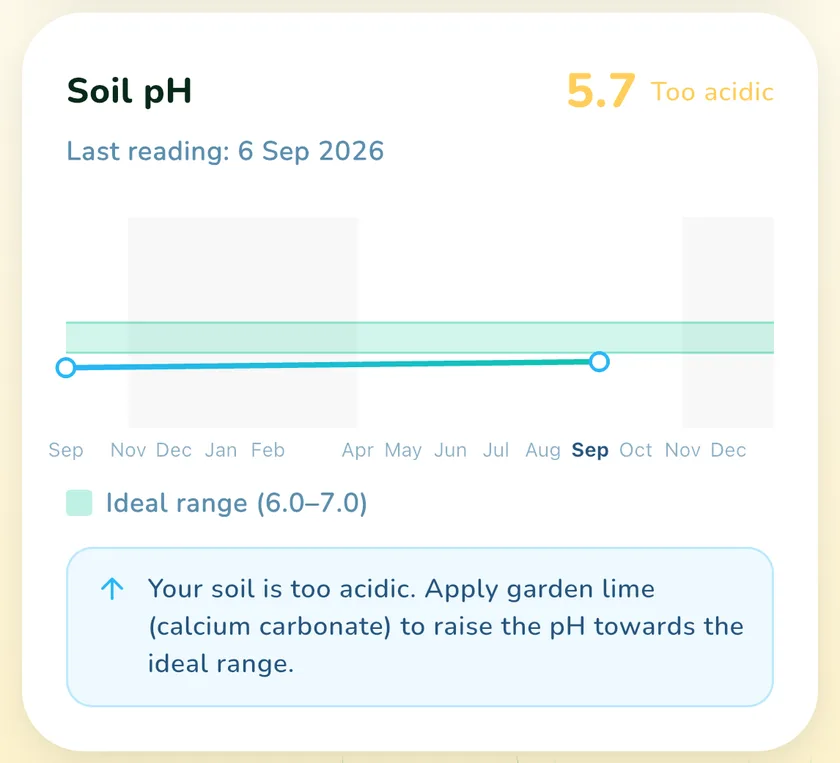
The card appears once you have logged at least two pH readings in the Log tab. Below 6.0 it suggests garden lime; above 7.0 it suggests sulfur or an acidifying fertiliser.
How much lime does a lawn need?
It depends on your soil and how far the pH must move. Clay and loam need more lime than sand to shift the same amount, so follow the lab report or the pack, and split big corrections over two applications.
The app’s amounts card shows garden lime at one flat rate for your mapped lawn:
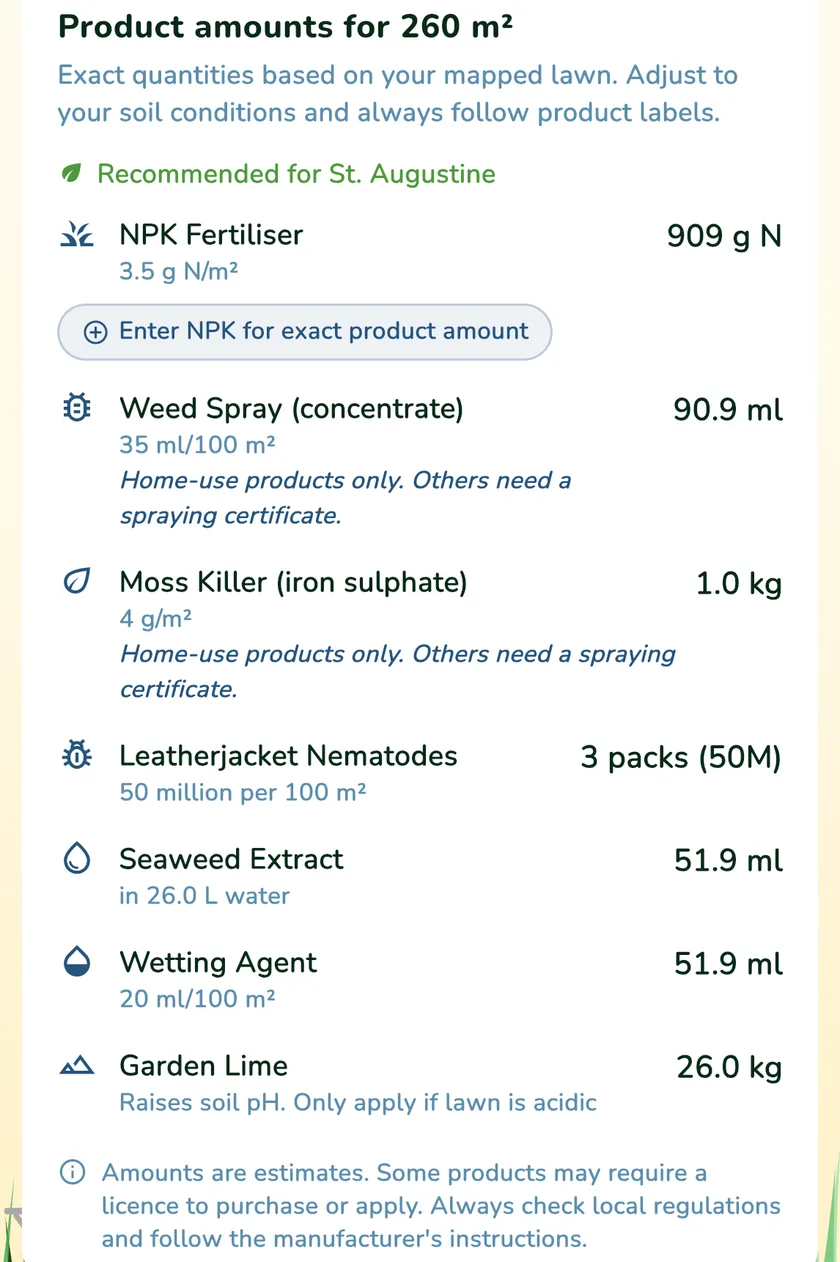
That is 100 g/m², one maintenance dose rather than a rate scaled to your soil. The line only shows while your soil is acidic or untested: once you log a pH of 6.0 or higher, the card drops it. For the Sydney example at pH 5.7, that is a sensible single application; retest a year later before doing it again.
When is the best time to lime?
Autumn or late winter, so the lime has time to work before the spring growth flush. Avoid the heat of summer. Water it in after spreading, and spread after coring if you can so more lime reaches the root zone. Keep it a couple of weeks apart from fertiliser.
Which lime should you buy?
Garden lime (calcium carbonate) or dolomite lime (calcium and magnesium carbonate). Avoid quicklime and hydrated lime, which are caustic and burn turf. Granulated products spread more evenly and dust less. To get the area right before you buy, see how to measure your lawn area.
Log each soil test in What a Green Lawn, and the pH card shows whether the lime is actually moving the number.