Liming the lawn is one of those jobs people do because a parent did. It only fixes one thing, acidic soil, and in much of the UK the soil is fine for grass as it is. Test before you lime.
What soil pH does a lawn need?
Most lawn grasses grow well between about 5.5 and 7.0. Fine fescues and bents, the grasses in many older UK lawns, are happy on slightly acidic soil. Perennial ryegrass prefers it closer to neutral. Below about 5.5 grass thins and nutrients become harder to use; above about 7.5 iron gets locked up and lawns can yellow even when fed.
Are UK soils acidic?
It depends where you live. Sandy heaths, the uplands and much of the north and west tend to be acidic, because rain leaches calcium out. Chalk and limestone areas, like the Downs and the Cotswolds, are alkaline and never need lime. Clay soils sit in between.
How do you test your soil pH?
Take 10 to 15 small cores from across the lawn, 5 to 10 cm deep, mix them and test. A garden centre kit gives a rough reading; a soil lab, including the RHS soil analysis service for members, gives an accurate one with nutrient levels.
What a Green Lawn charts the readings you log and flags anything outside 6.0 to 7.0:
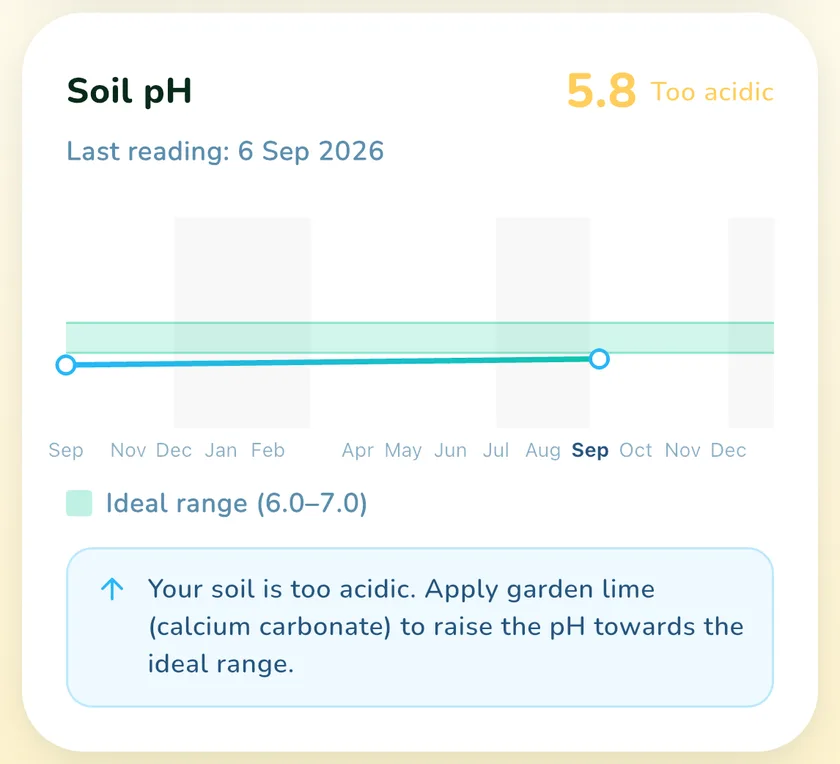
The card appears once you have logged at least two pH readings in the Log tab. The app’s ideal band starts at 6.0, so a lawn at 5.8 gets a lime tip. For a fine fescue or bent lawn that is borderline, not urgent: check how the grass is doing before you reach for lime.
How much lime does a lawn need?
It depends on your soil and how far the pH must move. Clay needs more lime than sand to shift the same amount, so follow the lab report or the bag, and split big corrections over two seasons.
The app’s amounts card shows garden lime at one flat rate for your mapped lawn:
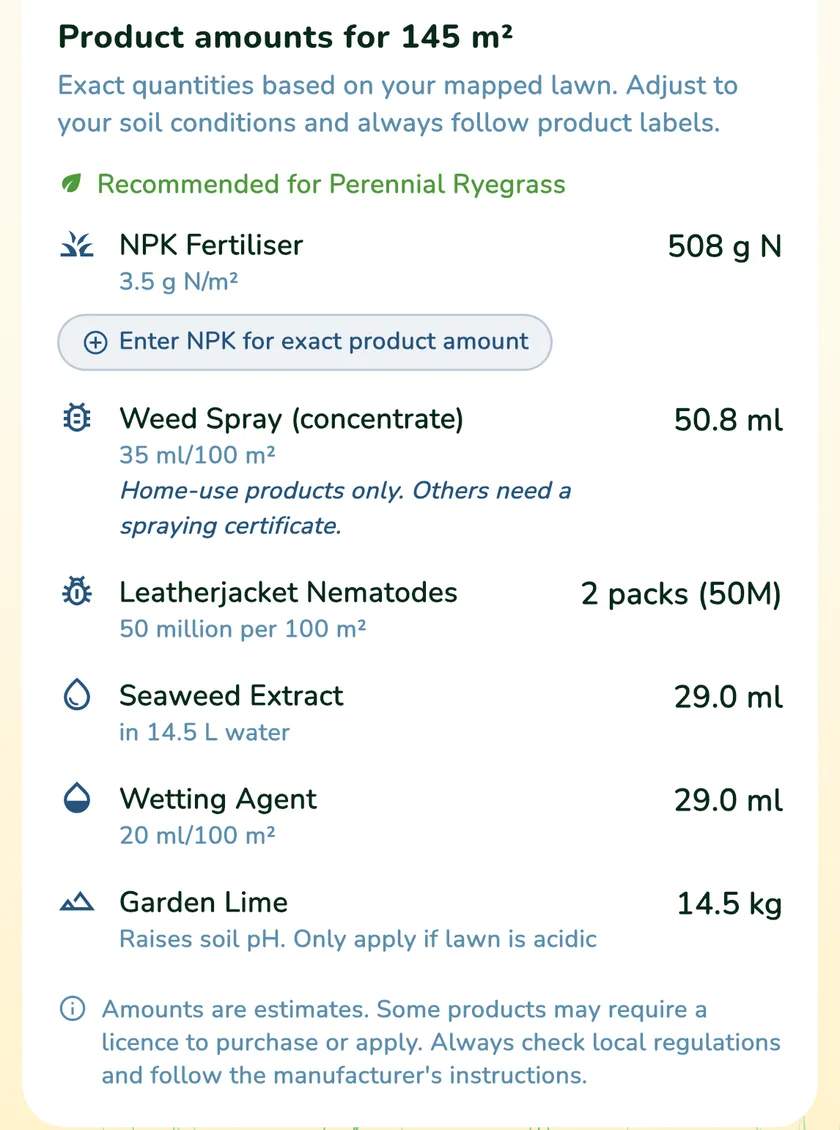
That is 100 g/m², a single maintenance dose rather than a rate scaled to your soil. The line only shows while your soil is acidic or untested: once you log a pH of 6.0 or higher, the card drops it.
When should you lime a lawn?
Autumn and winter, from October to February, on a dry, calm day when the ground is not frozen. The lime has months to work before spring growth. Spreading after hollow tining gets more of it into the root zone. Keep it a few weeks apart from any lawn feed.
Which lime should you use?
Ground limestone (calcium carbonate), sold as garden lime, or magnesian limestone if the soil needs magnesium. Both work slowly and gently. Avoid quicklime and hydrated lime, which are caustic and scorch grass. Granular lime is easier to spread evenly and dusts less.
Moss is the usual reason people reach for lime, but it is rarely the answer; see moss in your lawn. Log each test in What a Green Lawn, and the pH card shows whether your lime is actually moving the number.