Couch and kikuyu lawns build up thatch fast: a spongy layer of runners and dead grass that keeps water and fertiliser from reaching the soil. Scarifying fixes it, but it is rough work for the lawn, so the timing matters more than the machine.
Does your lawn need scarifying?
Cut a small wedge from the lawn and look at the side. If there is more than about 1.5 cm of spongy runners and brown material between the green leaves and the soil, it is time. Other signs are a lawn that feels bouncy underfoot and water that runs off instead of soaking in.
Couch and kikuyu thatch up quickly. Buffalo and zoysia build it more slowly. If the soil itself is hard and compacted, coring or aerating does more than scarifying.
When is the best time to scarify?
When the lawn is growing strongly and can fill in within a few weeks:
| Grass | Best time | How hard |
|---|---|---|
| Couch, kikuyu | October to November, once fully green and growing | Hard scarify or scalp |
| Buffalo | Late October to November | Light, spring tines or a high blade setting |
| Zoysia | November | Light |
| Tall fescue (Melbourne, Canberra) | Autumn, March to April | Light to moderate |
Scarifying warm-season grass in autumn is a mistake. It has no time to recover before winter, and bare patches fill with winter grass and bindii.
What should the soil be like?
A little moist and firm. Too wet and the scarifier rips out runners and leaves grooves. Too dry and it bounces and shreds grass that is already stressed. If a screwdriver pushes in easily and comes out clean, you are good to go.
Here is the buffalo lawn in Sydney on a cool, wet September morning:
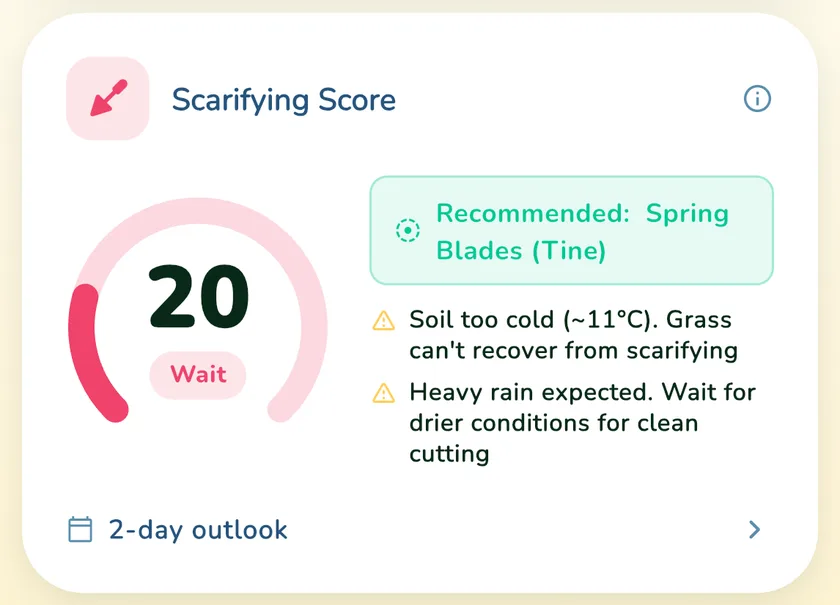
The app scores it 20, wait. For warm-season grass it counts soil below about 12°C as too cold, because couch and buffalo barely grow until the soil warms past that, and heavy rain is on the way as well. Even so, it recommends spring tines rather than fixed blades: when the day comes, start with a gentle rake-out. For a buffalo lawn in September, that is the right call. Save a proper scarify for October or November, once it is growing flat out.
Spring tines or fixed blades?
Most electric scarifiers at Bunnings come with two rollers:
| Roller | What it does | When |
|---|---|---|
| Spring tines | Rakes out dead material and loose thatch, barely touches soil | Early spring, buffalo, light thatch |
| Fixed blades | Cuts through the thatch and runners into the soil surface | Late spring, couch and kikuyu with heavy thatch |
What do you do after scarifying?
- Rake up the debris. A thatchy couch lawn can fill the green bin more than once.
- Fertilise to push new growth. See When to Fertilise Your Lawn.
- Water it in if no rain is due, within your local water restrictions.
- Top dress any low spots or bare patches with a thin layer of lawn soil.
What a Green Lawn checks soil warmth and moisture for your address and scores scarifying, sowing and fertilising every day for your grass type.