Dethatching looks like it wrecks a lawn, and done at the wrong time, it does. Done when the grass is growing hard, the same lawn fills back in thicker within a month. So before renting a power rake, check two things: whether you actually have a thatch problem, and whether this is the week the grass can take it.
Does your lawn even need dethatching?
Thatch is the layer of dead stems and roots between the green grass and the soil. A little is healthy: it cushions the lawn and holds moisture. Over about half an inch, it starts to act like a sponge that keeps water, air and fertilizer from reaching the roots.
Cut a small wedge of turf with a trowel and look at it from the side. If you see more than half an inch of brown, spongy material, dethatch. Kentucky bluegrass, creeping bentgrass, Bermuda and zoysia build thatch quickly. Tall fescue lawns almost never need it. Hard, compacted soil is a different problem that core aeration solves.
When is the best time to dethatch?
When the grass is growing fast enough to recover in three to four weeks:
| Grass | Best time | Second choice |
|---|---|---|
| Kentucky bluegrass, fine fescue, ryegrass | Mid-April to May, after the lawn has greened up and been mowed a couple of times | Late August to September, with overseeding |
| Bermuda, zoysia | Late spring to early summer, once fully green and growing | Not in fall |
For cool-season lawns, both windows work, and each has a trade-off. Spring gives the grass the whole season to recover, but you cannot overseed if you also use a crabgrass preventer. Early fall lines up perfectly with overseeding, but dethatch before mid-September in the North so seedlings establish before frost.
Skip July and August on cool-season grass, and never dethatch a dormant or drought-stressed lawn.
What should the soil be like?
Slightly moist and firm. Too wet and the blades tear up clumps of turf and leave muddy grooves. Too dry and they bounce off hard ground and rip grass that is already stressed. If a screwdriver slides in easily and comes out clean, you are good.
Here is a bluegrass lawn in Chicago on a rainy September day:
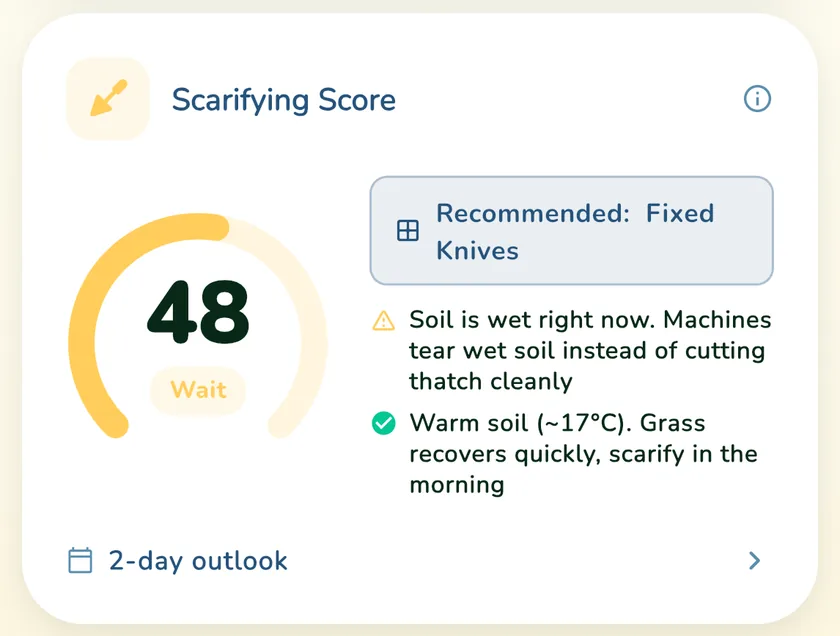
The app calls it scarifying, which is the British word for the same job. The score is 48, a wait: the soil is wet right now, and a power rake on wet soil tears it up instead of cutting the thatch cleanly. The temperature is good, soil around 63°F, so the grass would recover quickly once things dry out. Because it is September and the grass is strong after summer, the app recommends fixed blades. Early in spring, or when soil is below about 55°F, it recommends gentler spring tines instead.
Tines or blades?
| Tool | What it does | When |
|---|---|---|
| Spring tines (tine dethatcher, dethatching rake) | Pulls out loose thatch and dead grass, barely touches the soil | Early spring, light thatch, soil under about 55°F |
| Fixed blades (power rake, verticutter) | Slices through thatch and just into the soil surface | Late spring and early fall, thatch over half an inch |
Set the blades so they just scratch the soil, about an eighth of an inch deep. Start high and lower one notch at a time.
What do you do after dethatching?
- Rake up the thatch. On a typical yard it fills several lawn bags.
- Overseed thin spots while the soil is exposed. See When to Overseed Your Lawn.
- Fertilize to push recovery.
- Water if there is no rain within a few days.
What a Green Lawn checks soil temperature and moisture for your address and gives a daily score for dethatching, overseeding and fertilizing, so you do not rent the power rake for the one rainy weekend in September.