Scarifying is the most brutal thing you will do to your lawn all year. Afterwards it looks half dead, bags of moss go to the tip, and the neighbours wonder what happened. Done at the right time, the lawn is thicker than before within a month. Done at the wrong time, the bare patches fill with moss and weeds instead.
When is the best time to scarify?
When the grass is growing well enough to fill the gaps. In the UK that means:
- September to early October. The main time for a proper scarify. The soil is still warm after summer, the rain is back, and you can overseed straight after. In Scotland and the north, aim for September.
- April to May. Fine for a lighter pass once you have mown a couple of times. The grass has the whole season to recover, but a heavy spring scarify can leave the lawn scruffy for weeks.
Avoid March, which is too cold, and late October onwards, when the grass will not recover before winter. Leave it alone in high summer too: heat and dry soil on top of the damage can leave large brown patches.
What should the soil be like?
Damp and firm. The blades should slice through the thatch, not rip the grass out by the roots.
- Too wet: the machine tears the turf and leaves muddy grooves. After heavy rain, give it a day or two.
- Too dry: the blades skip, and grass already stressed by a dry spell struggles to come back.
- About right: some light rain in the last day or two, and a screwdriver pushes in without coming out muddy.
How do you tell if it is a good day?
Look at the rain now and over the next day, and the soil temperature. Here is a back garden in Manchester:
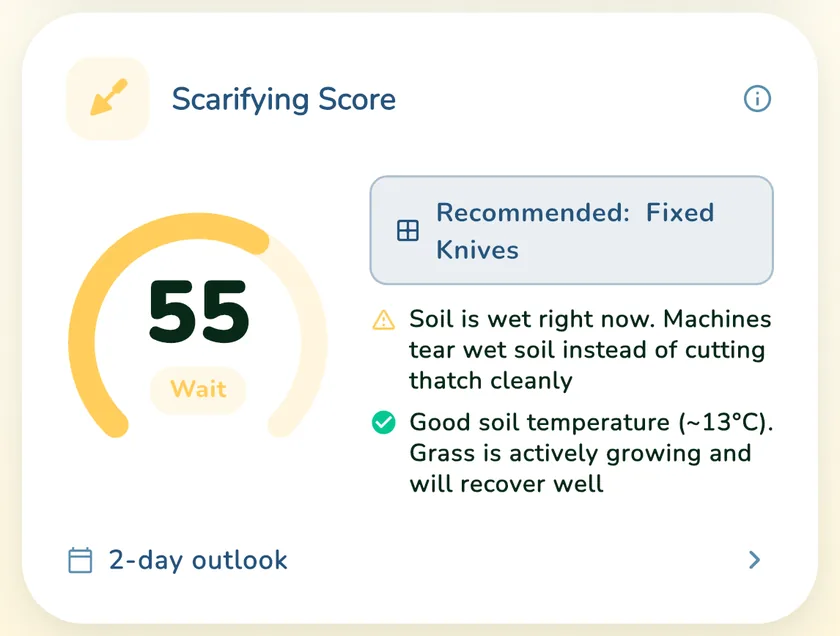
The score is 55 out of 90, a wait. The soil is about 13°C, so the grass is growing and would recover well, but it is wet right now, and a scarifier on wet soil tears it up instead of cutting cleanly. The app recommends fixed knives, because it is September and the grass is strong after summer. In early spring, or with soil below about 13°C, it recommends gentler spring tines.
Spring tines or fixed blades?
Most electric scarifiers sold at B&Q, Homebase and garden centres come with two rollers:
| Roller | What it does | When |
|---|---|---|
| Spring tines (raking roller) | Combs out dead moss and loose thatch, barely touches the soil | Early spring, light moss, soil under about 13°C |
| Fixed blades | Cuts through thatch and just into the soil surface | Autumn and late spring, heavy thatch |
Use the gentlest option that does the job. If there is not much thatch, the tines are enough.
Should you kill the moss first?
Yes, if the lawn is mossy. Apply a ferrous sulphate moss killer about two weeks before. The moss goes black and dies, and when you scarify you pull out dead moss rather than spreading live spores around the garden.
What do you do after scarifying?
- Rake up the debris and compost it, unless you used moss killer.
- Overseed the bare patches while the soil is exposed. See When to Overseed a Lawn.
- Feed. In autumn use an autumn feed, in spring a pre-seed or spring feed.
- Water if it stays dry for a week.
What a Green Lawn checks soil temperature and rain for your garden and scores scarifying, overseeding and feeding every day, so you pick the dry, mild weekend rather than the soggy one.