Grass does not care how mild the afternoon feels. Roots and seed respond to the soil, and the soil keeps its own, slower calendar. In spring it lags weeks behind the air; in autumn it holds on to summer warmth long after the air turns chilly.
Which soil temperatures matter for a lawn?
These are the ranges the What a Green Lawn app uses for UK lawns, with soil at about 10 cm:
| Soil temperature | What happens | What to do |
|---|---|---|
| Below about 6°C | Seed will not germinate, grass barely grows | Leave it alone |
| 6 to 8°C | Seed germinates very slowly | Too early for seed |
| 8 to 12°C | Seed germinates steadily | Good for scarifying |
| 12 to 18°C | Fast, even germination | Best window for overseeding |
| 18 to 24°C | Warm, seedlings dry out fast | Keep seed and lawn watered |
| Above 24°C | Heat and drought stress | Hold off sowing and scarifying |
For scarifying the app uses a slightly different range: good from about 8 to 15°C, fine up to 22°C if you do it in the morning. Below 13°C it suggests spring tines rather than fixed knives.
When is the soil warm enough to feed?
Roots start taking up nutrients as the soil warms, so the first spring feed works once the soil is past about 8°C and the grass is visibly growing. Feed spread on cold March soil mostly sits there or washes off. The app’s fertiliser score looks at air temperature, rain and the season rather than the soil estimate, but the two usually agree.
How do you measure soil temperature?
Push a soil thermometer 5 to 10 cm into the lawn in the morning, when the soil is coolest. Check a sunny spot and a shaded one, and watch the trend for three to five days rather than trusting a single reading.
The app estimates the soil temperature for your location every day from the air temperature and the month:

Below about 3°C it reads too cold, below 8°C cool, up to 18°C ideal, up to 24°C warm with a reminder to keep the lawn watered, and above that hot. It is an estimate, not a measurement: the model was calibrated against Danish soil data at 10 cm, a climate close to much of the UK, so treat it as a guide.
How do you compare your own readings with the estimate?
Log thermometer readings in the Log tab, and the ground temperature card charts them against the app’s estimate for today:
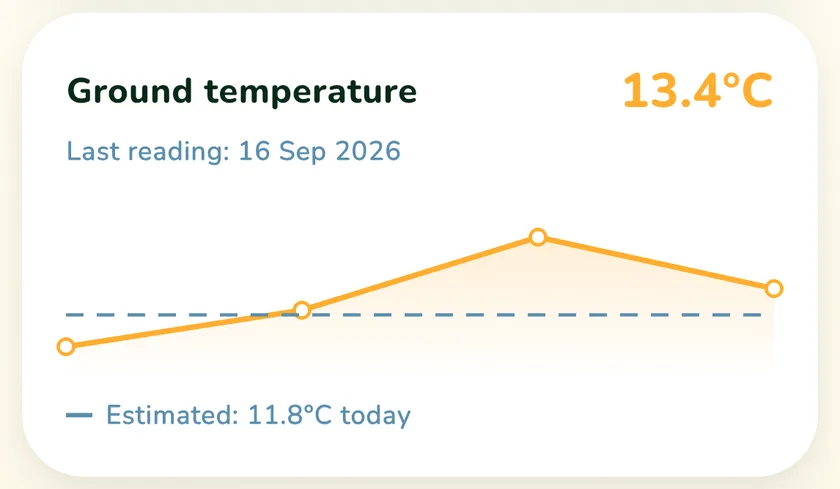
These example readings are model values, not a thermometer in a Manchester lawn, but they make the point: measured soil can sit above or below the estimate. If yours differs day after day, trust your thermometer.
Why is early autumn the best time to overseed?
Because the soil is still warm. The air cools in September, but the soil across most of the UK stays between 12 and 18°C for weeks, which is exactly what seed wants, and weeds are slowing down. See when to overseed your lawn and when to scarify your lawn.
The overseeding and scarifying scores in What a Green Lawn use this soil estimate every day, together with rain and the season.