
After a hot, dry July the lawn looks tired, with thin patches along the driveway and bare spots where the kids play. The instinct is to wait until spring. For a Canadian lawn that is usually the wrong call: late summer is the best seeding window of the year.
When is the best time to overseed?
From about mid-August to mid-September in southern Ontario, Quebec and coastal BC. On the Prairies and further north, aim for mid-August to the end of the first week of September.
In that window three things line up:
- Warm soil. Still 12-18°C after summer, so seed germinates fast.
- Cooler air. Seedlings grow without heat stress.
- Fewer weeds. Crabgrass and most annual weeds are done for the year.
New grass needs roughly six to eight weeks of growth before hard frost. Count back from your average first frost and you have your deadline.
Why is spring overseeding harder in Canada?
Spring soil warms slowly. The air can hit 18°C in early May while the soil is still 6°C, and seed sits there doing nothing. By the time it comes up, weeds are coming up too, and the young grass meets July with shallow roots.
How do you pick the day?
Soil temperature and the forecast. Here is a Kentucky bluegrass lawn in Toronto:
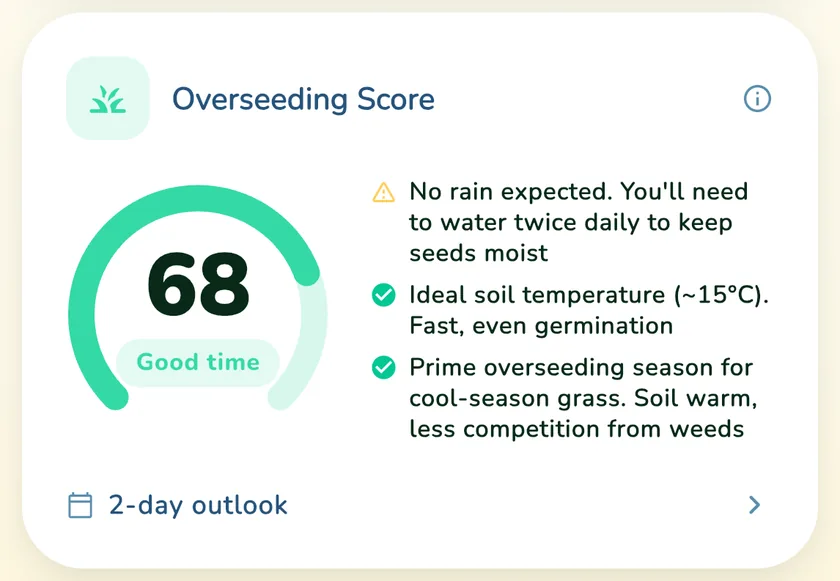
The app scores it 68 out of 90. The soil is about 15°C, ideal for fast, even germination, and mid-September is prime season for cool-season grass. What keeps it from a top score is the forecast: no rain, so you will need to water twice a day to keep the seed moist. The app estimates soil temperature from the air temperature and the month, because in September the ground still holds summer warmth.
How do you overseed?
The steps are further down this page. Two matter more than any others:
- Soil contact. Seed thrown on thatch germinates and dies. Core aerating first, a service that door-to-door crews offer in many Canadian suburbs, gives seed thousands of little pockets of soil. If thatch is thick, dethatch first; see When to Dethatch Your Lawn in Canada.
- Water. Keep the surface moist every day until the grass is up. A seedling that dries out once is dead. Check your city’s watering bylaw; some make an exception for new seed or sod.
Which seed should you buy?
For sunny lawns, a Kentucky bluegrass and perennial ryegrass mix: bluegrass spreads and survives winter well, ryegrass comes up fast and protects the soil while the bluegrass catches up. For shade under maples and spruce, a fine fescue mix. On the Prairies, look for mixes with some hard fescue for drought tolerance.
What a Green Lawn checks soil temperature and rain for your address every day and scores overseeding, fertilizing and dethatching, so you seed while the window is still open.