Moss is a sign of weak grass, not the cause of it. It fills the gaps grass leaves in shade and wet soil, which is why it thrives on the BC coast and in the shady corners of lawns everywhere from Ontario to the Maritimes. Kill it, and it comes back unless the grass gets the upper hand.
Why is moss growing in your lawn?
- Shade from trees, fences or the house.
- Wet or compacted soil, where snowmelt and rain sit in spring.
- Low fertility, so the grass thins out.
- Mowing too short, which scalps the grass.
- Acidic soil, common on the West Coast and in parts of Atlantic Canada.
Which moss products are allowed in your province?
Moss control products sold in Canada are pest control products and carry a registration number under the Pest Control Products Act. On top of that, Ontario (since 2009) and several other provinces ban cosmetic pesticide use on lawns and allow only lower-risk active ingredients. Some iron-based products are on those lists, but check your province’s rules for the product you pick.
What a Green Lawn works out a moss treatment amount from your mapped lawn:
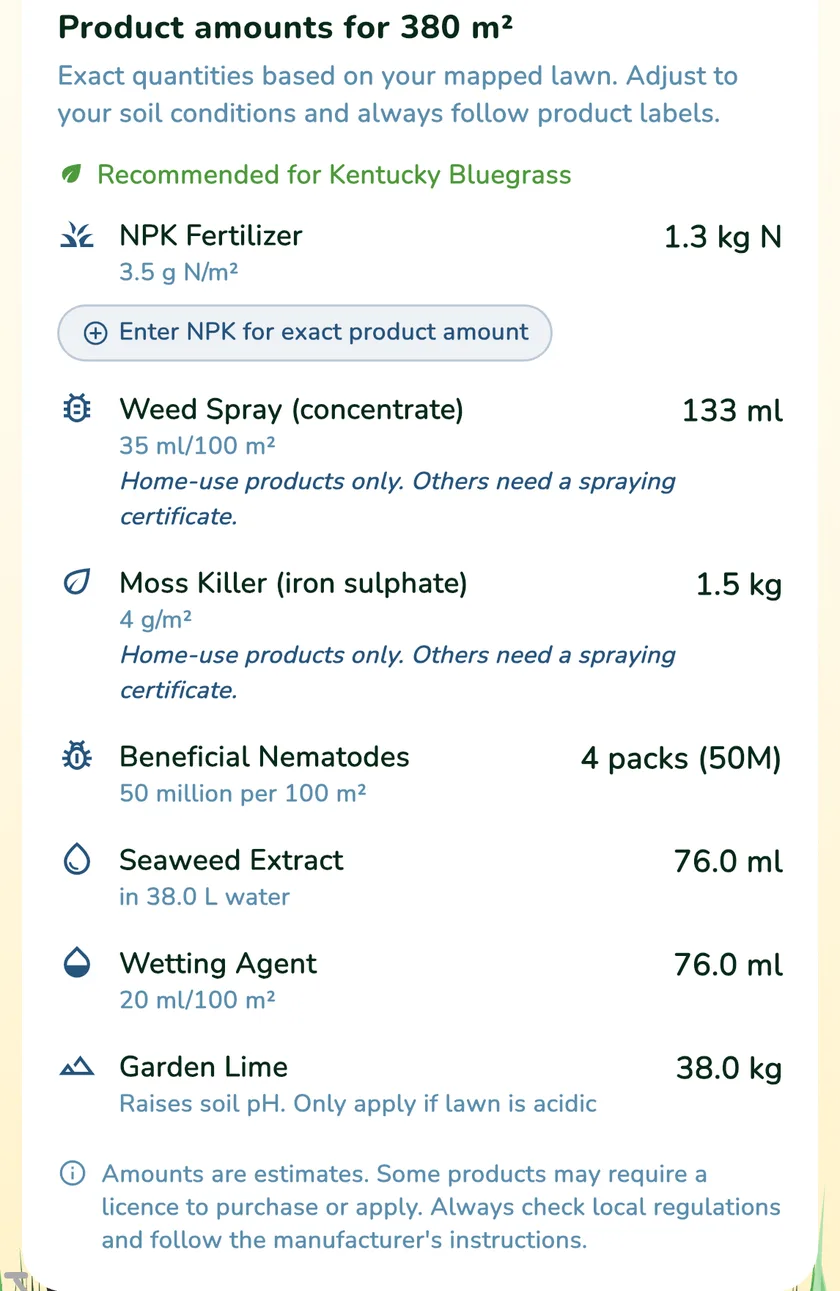
That 4 g/m² is for pure iron sulphate. A registered moss control product has its own rate, so follow its label instead. The card itself says the amounts are estimates and to check local regulations.
When is the best time to treat moss?
Spring, once the snow is gone and the lawn is growing (April to May in much of Canada), and early fall (September). The moss is green, the soil is moist and the grass can fill the gaps. On the BC coast, fall treatment works well into October.
How do you apply it?
Pick a calm day with moist soil and no downpour in the forecast. Spread or spray evenly, in two passes at right angles, and follow the label on watering in and keeping pets off. Keep it off concrete, because the rust stains are close to permanent. The moss turns black within about two weeks.
What do you do after the moss is dead?
Rake or dethatch the black moss out, then overseed the bare patches. See when to dethatch your lawn and when to overseed your lawn.
How do you keep moss from coming back?
- Raise the mower, see how short to mow grass.
- Prune trees to let light in, or seed a shade-tolerant fine fescue mix.
- Core aerate compacted, soggy areas.
- Feed the lawn so it stays thick.
- Test the soil pH and lime only if it is acidic.
Log each treatment in What a Green Lawn with the product and amount, so next spring you know what you used and when.