Moss is not really the problem. It moves into lawns where grass struggles, and it fills the gaps grass leaves behind. Iron sulfate kills it fast and cheaply, but unless you change what the grass is struggling with, the moss is back by next spring.
Why is moss growing in your lawn?
Moss wins where grass is weak. The usual causes, roughly in order:
- Shade from trees, fences or the house, typical on north-facing lawns.
- Wet or compacted soil, where water sits after rain.
- Low fertility, so thin grass leaves bare soil for moss to take over.
- Mowing too short, which scalps the grass and lets light onto the soil.
- Acidic soil, common in the Pacific Northwest and parts of the Northeast.
Moss is most at home in the cool, wet climate west of the Cascades, but any shaded, damp corner of a Midwest lawn will grow it too.
How do you use iron sulfate on moss?
Iron sulfate (ferrous sulfate) dries out moss and turns it black, while grass shrugs off a normal dose and often greens up. You can buy it as plain granules, as a liquid, or as an iron-based moss killer. Products sold with a claim to kill moss are pesticides with an EPA registration number, and their label is the law: use the rate on the bag, not a number from a forum.
The What a Green Lawn app works out the amount for plain iron sulfate from your mapped lawn size:
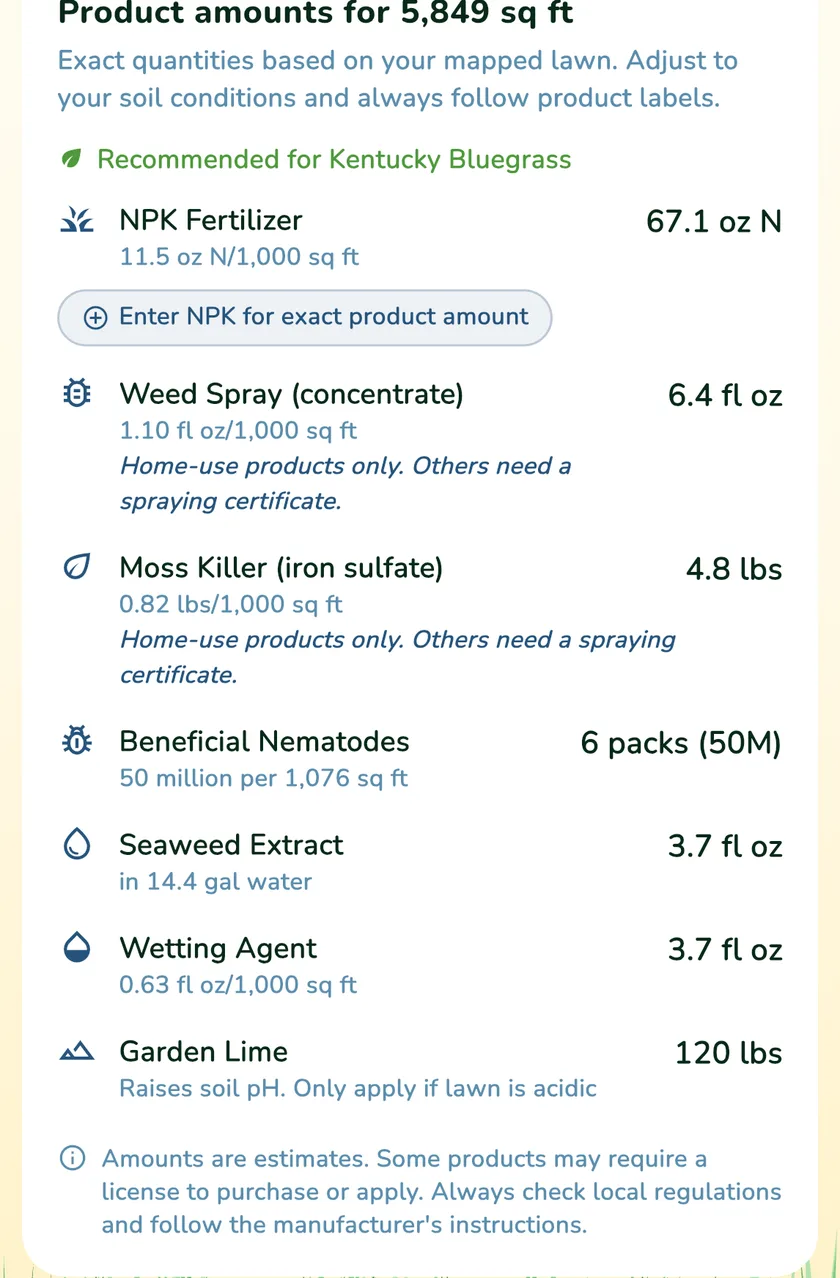
That 0.82 lbs per 1,000 sq ft (4 g/m²) is the rate for pure iron sulfate. A formulated moss killer or a fertilizer with added iron has its own rate, so follow its label instead. The card itself says the amounts are estimates and to check local rules.
Spread on a calm day when the moss is moist and growing, and follow the label on watering in. Keep granules and spray off concrete and pavers, because the rust stains are close to permanent.
When is the best time to treat moss?
Spring (April to May in most of the country) and early fall (September to October) are best. The moss is actively growing, the soil is damp, and the grass is growing fast enough to fill the gaps once the moss is gone. Avoid summer heat and drought, and never treat frozen or dormant grass.
What do you do once the moss is dead?
After about two weeks, rake out the black moss with a spring-tine rake or a dethatcher. On a mossy lawn that can be a surprising amount. Then overseed the bare patches so grass fills them before moss or weeds do. The dethatching guide and the overseeding guide cover timing in more detail.
How do you stop moss coming back?
- Raise the mower. Mowing too short is one of the easiest causes to fix; see how short to mow grass.
- Thin tree canopies to let light in, or use a shade-tolerant fine fescue mix where the shade stays.
- Core aerate compacted, soggy areas in fall.
- Feed regularly so the grass stays thick. In Illinois, lawn fertilizer on an established lawn has to be phosphorus-free unless a soil test shows the soil needs it.
- Test the soil pH and lime only if the test says the soil is acidic.
Log each treatment in What a Green Lawn with the product and amount, so next spring you know what you used, where and when.